
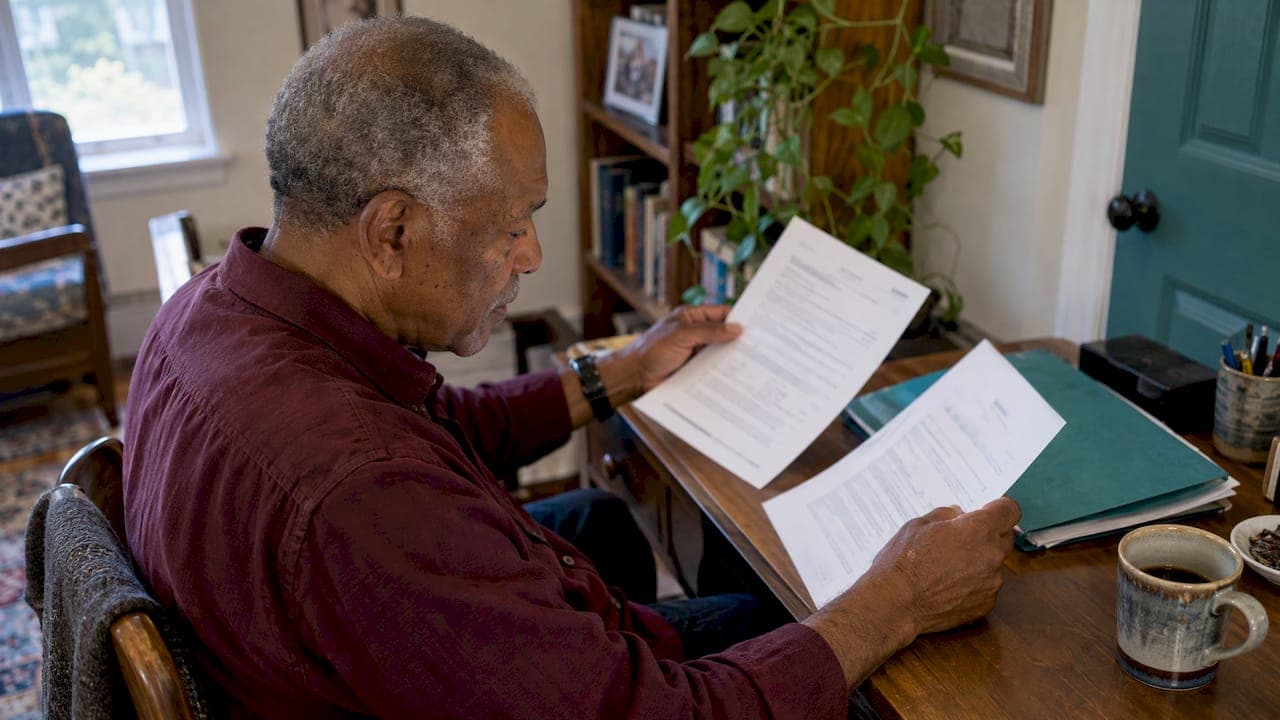
Picture a Sunday afternoon. You're at the kitchen table with a cup of tea, a bank statement and the quiet that comes with living on your own. A form asks you to name a beneficiary. Your pen stops. Who, exactly? A niece you see twice a year? The friend who drove you home after your knee surgery? The animal rescue where you've volunteered for a decade?
That pause is not a sign that something is wrong with your life. It's a sign that you have real choices, and that the people and causes you love may not match the default boxes on a form. Here is the short answer to the question that brought you here: a transfer-on-death (TOD) designation usually beats your will for the asset it covers, and a will handles whatever those designations leave behind. You generally want both working together.
TL;DR
- A beneficiary designation on an account, policy or deed is a contract-style instruction. It generally takes precedence over what your will says about that same asset.
- A will covers everything that has no named beneficiary, and it's where you name your executor. TOD and POD forms can't do that.
- TOD and POD both skip probate for the asset. POD is mostly for bank accounts, TOD for investments and, in some states, real estate.
- Avoiding probate is not the same as avoiding creditors or taxes, and a beneficiary who dies first can quietly undo your plan.
- For solo agers, the most useful move is to name people and causes you actually chose, then check them every so often.
Table of Contents
- Why the form beats the will
- What a will does that nothing else can
- Transfer on death, payable on death, and beneficiary designations: the same idea in different clothes
- The house question: does a TOD deed override a will?
- What if the person you named dies first?
- Probate-free is not creditor-free
- Choosing who goes on the form when you don't have children
- How often to look at the forms again
- Our perspective
- When you want a second set of eyes
- Putting it together without losing your Sunday
- FAQ
- Sources
Why the form beats the will
Most people assume the will is the final word. It's the document with the dramatic reputation, after all. But in practice, a lot of what you own never passes through it.
When you add a beneficiary to a bank account, brokerage account, retirement account or life insurance policy, you create a direct line from that asset to a person. Montana State University Extension explains that beneficiary designations in contracts take precedence over a will, and that the financial institution pays the people named on the form. The institution follows the form. It doesn't read your will first.
Life insurance works the same way. According to the National Association of Insurance Commissioners, the benefits go to the named beneficiary, and a will does not affect their distribution unless the estate itself is the beneficiary.
So if your will says "everything to my sister" but your brokerage account still lists an ex-partner as the TOD beneficiary, the brokerage account goes to the ex-partner. That is the single most common surprise in this whole topic, and it's entirely avoidable.
What a will does that nothing else can
A will is not obsolete. It does a few jobs that no designation form can do.
- It catches the leftovers. Jewelry, furniture, a car without a TOD designation, a book collection, a bank account with no beneficiary. The Texas state toolkit on TOD deeds notes that a will may be needed to transfer additional assets, such as jewelry or stocks, that its forms don't cover.
- It names your executor. Someone has to gather the paperwork, close accounts and carry out your wishes. A TOD form says who gets an asset. It says nothing about who handles the rest.
- It can say what the forms can't. Who gets the dog? Who gets Grandmother's table? Who gets the photographs from your trip to Portugal? Personal belongings often matter more to the people you love than the account balances do.
If you're aging without children, that executor choice is a big one. We write about it more in our piece on legacy planning without heirs, including how to think about three to five trusted helpers rather than one person carrying everything.
Transfer on death, payable on death, and beneficiary designations: the same idea in different clothes
These terms get tossed around as if they were interchangeable. They're close cousins, but not twins.
| Tool | Usually applies to | What happens at death | Does your will control it? |
|---|---|---|---|
| Payable on death (POD) | Bank accounts, CDs, savings bonds | Funds go straight to the named person | No |
| Transfer on death (TOD) | Brokerage accounts, stocks, bonds, mutual funds | Securities move to the named person | No |
| TOD deed | Real estate, in states that allow it | Property passes to the named person without probate | Generally no |
| Beneficiary designation | Life insurance, retirement accounts | Proceeds go to the named person | No |
| Will | Anything without a named beneficiary | Passes through probate, directed by your executor | Yes, by definition |
The SmartAsset comparison puts the POD and TOD difference simply: POD applies to bank accounts, CDs and savings bonds, while TOD covers investment accounts and, in some states, real estate and vehicles. Banks tend to say POD. Brokerages tend to say TOD. Insurers and retirement plan administrators say beneficiary. The idea underneath is the same: you name someone, and the asset goes to them directly.
One detail that surprises people: the person you name has no claim while you're alive. An estate planning council presentation states that a named beneficiary has no ownership interest in or right to the property while the owner is living. You keep full control. You can spend the money, sell the stock or change the name. That's part of why these tools suit people who value their independence.
The house question: does a TOD deed override a will?
For most of us, the home is the biggest asset. A TOD deed lets you name who receives it, and per Cornell's Legal Information Institute, the property transfers to the designated beneficiary at your death without probate.
Does it beat a will? Where it's available and properly completed, generally yes. In Texas, the state's own toolkit says a properly completed TOD deed trumps a contradictory provision in a will. Other states have their own rules, and not every state allows TOD deeds at all. Some have their own names for similar tools. Your county recorder or a local estate planning attorney can tell you what's allowed where you live.
Here is the gentle caution that belongs here. Transferring a home has real financial consequences, and the Consumer Financial Protection Bureau's guide on leaving your home to heirs recommends getting advice from legal and tax professionals. That's worth doing before you record anything, especially if you might need to sell, borrow against the house, or move to a different kind of housing later.
What if the person you named dies first?
This is where solo agers have a particular reason to pay attention. If your plan hangs on one person, and that person is your age or older, the odds of an outdated form go up.
Montana State's guide explains that if a named beneficiary dies before you, the designation may allow a contingent or successor beneficiary. Otherwise, the result depends on the contract. For a POD account, if no designee survives you, the account passes to your estate. That means it ends up in your will's hands, and, if you have no will, in your state's default rules.
So a second name on every form is not a formality. It's the quiet backup that keeps a good plan from unraveling.
Probate-free is not creditor-free
A lot of articles talk about skipping probate as if it were a magic trick. It saves time and paperwork. It doesn't make debts disappear.
The Montana State guide states that avoiding probate does not mean the assets are protected from your creditors. With limited exceptions, non-probate transfers remain subject to your liabilities, creditor claims and taxes. The Texas toolkit says the same about TOD deeds specifically: they don't protect the property from creditor claims. And Investopedia notes that TOD designations can be more efficient than a will but may not suit complex estates.
If your situation has any complexity, such as a blended family, a special-needs relative, a business, or property in more than one state, that's the moment for an estate planning attorney rather than a form downloaded at midnight.
Choosing who goes on the form when you don't have children
The forms assume a family tree. They have a line for a spouse and a line for children, and a quiet little space where everyone else is supposed to fit. When you're growing older on your own, the people who matter most may be a chosen circle: a neighbor who has watched your house for years, a friend from your hiking group, a cause that gave your life shape.
You can name them. Beneficiary forms don't ask for a blood relationship. We've written about how to think this through in beneficiaries without family, including friends and causes. A few thoughts from conversations with readers:
- Name a person, not just a role. "My friend" won't work on a form. A full legal name will.
- Think about who can handle the money. A friend who is wonderful company may not want to be an executor, and that's fine. Executor and beneficiary can be different people.
- Consider a cause alongside a person. Many solo agers split an account between a friend and an organization they've supported for years. Giving to a cause can feel like a final bit of belonging.
- Ask before you name. A short, warm conversation avoids awkwardness later. "I'd like to put you down as someone who'd carry this out. How would you feel about that?" Most people are touched.
When a death happens, paperwork spreads in unexpected directions. Even small tasks, such as what to do with a passport when someone dies, land on whoever is handling things. Choosing people who are organized and willing is as important as choosing people you love.
How often to look at the forms again
Beneficiary forms are not set-and-forget. Montana State's guide suggests reviewing designations before and during marriage, after divorce, after the death of a spouse or beneficiary, with the birth of a child, or if a beneficiary's name changes.

For a solo ager, add your own milestones: a move, a retirement, a friendship that has deepened or faded, a new cause you care about. Many people find that a yearly look, perhaps on a birthday or the first cold morning of autumn, keeps this from becoming a chore. It pairs naturally with refreshing your emergency contacts, which we talk about in why seniors update emergency contacts annually.
The same logic applies to your digital life. Accounts with online access may need a plan too, and our guide to digital legacy planning walks through that.
Our perspective
We hear a version of the same worry from many readers. "I don't have anyone to leave it to, so why bother?" We think that framing gets it backwards. Because you don't have a default heir, you get to decide, and that is a form of freedom.
The people at Aging Solo Today come to this with lived experience. Our founder is a solo ager, and we know how a plain legal form can stir up feelings that have nothing to do with law. Naming a beneficiary is a small act of saying who and what mattered. We'd rather you do it with a cup of tea and a clear head than avoid it for years because it felt heavy.
In practice, we suggest thinking of the pieces this way. Your designations carry specific assets to specific people. Your will catches the rest and names the person who will see it through. Neither is more important. Together they let you stop thinking about the paperwork and get back to the part of life that is actually yours: the dinners, the trips, the friendships, the afternoons that belong to nobody else.
We're not lawyers, and what we offer is non-medical, non-legal guidance. For the legal details in your state, a local estate planning attorney is the right person. Our job is to help you walk in with your thoughts organized and your questions ready.
— Mike Crawford
When you want a second set of eyes
Sometimes it helps to talk it through with someone who understands the solo path. Our Solo Aging Clarity Session is a 45-minute Zoom conversation, priced at $97, where we help you sort out what matters to you and what to do next. It is not legal advice, and it's not a sales pitch for a package. It's a clear-headed conversation about your own situation.

You can book a Solo Aging Clarity Session or start with our free Solo Aging 101 overview. If you'd like a broader read first, our end-of-life planning guide for people aging without children is a good companion to this article.
Putting it together without losing your Sunday
You don't have to do everything in one sitting. A gentle order that many people find easier:
Start with the accounts you already know about. Look at who is listed on each one. Often you'll find a name that no longer fits, or no name at all. Fix one this week. Then think about your home, and if a TOD deed is available where you live, talk to an attorney about whether it suits you. After that, think about your will and your executor. It's okay if that takes a few months.
Then close the folder, literally, and go do something you love. A plan is there to give you room to enjoy the life you're already living. If you want to think about the larger picture, we also have a piece on why childless aging calls for earlier planning, and a reflective exercise in the senior life review process that helps you name what you want your life to say.
FAQ
Does a transfer on death deed override a will?
Where TOD deeds are allowed and properly completed, generally yes. Texas's official toolkit says a valid TOD deed trumps a contradictory will provision. Rules differ by state, so check with a local estate planning attorney before relying on it.
What is the difference between transfer on death and payable on death?
The effect is similar: a named person receives the asset without probate. POD is typically used for bank accounts, CDs and savings bonds. TOD is typically used for investment accounts and, in some states, for real estate and vehicles.
Does a beneficiary designation beat a will?
For that specific asset, yes. Beneficiary designations in contracts generally take precedence over a will, and the financial institution pays the person on the form. That's why you review both documents together.
Can I use TOD instead of a will?
Sometimes, but it rarely covers everything. Items without a named beneficiary, such as personal belongings, still need a will or fall to your state's default rules. A will is also where you name an executor.
What happens if my beneficiary dies before me?
It depends on the form. Some let you name a contingent beneficiary. For a POD account where no named person survives you, the funds go to your estate. Naming a backup avoids that.
Sources
- Designating Beneficiaries to Avoid Probate, Montana State University Extension
- Life insurance consumer insight, NAIC
- Transfer on Death Deed Toolkit, Texas
- Estate planning council presentation, February 2023
- Transfer-on-death deed, Cornell Legal Information Institute
- Payable on Death Account vs. Transfer on Death Account, SmartAsset
- Leaving your home to heirs, Consumer Financial Protection Bureau
- Transfer on Death designations, Investopedia
- What to do with a passport when someone dies